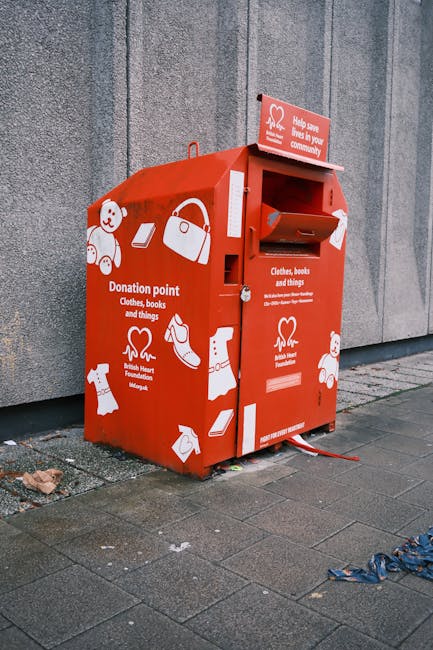
Insider tips for recycling and donation in Kingston rubbish jobs
Posted on 30/07/2026
If you are dealing with a flat clearance, a garden clear-out, a house move, or a fast turnaround on site, the difference between a messy job and a smart one often comes down to recycling and donation. The best insider tips for recycling and donation in Kingston rubbish jobs are not complicated, but they do save time, reduce waste, and make the whole process feel less like a scramble. Truth be told, most people have good intentions here; the challenge is knowing what can be reused, what should be recycled, and what needs proper disposal. This guide walks you through the practical side of it, with Kingston-specific thinking, simple decision points, and a few things that people often only learn the hard way.
Whether you are clearing a few bulky items or handling a larger load from a renovation, you will find a straightforward way to sort, separate, and move things on responsibly. No fluff. Just useful guidance you can actually use.
Why Insider tips for recycling and donation in Kingston rubbish jobs Matters
Recycling and donation are not just nice extras in a rubbish job. They shape the speed, cost, and outcome of the whole clearance. If you sort usable items before everything is tipped into a mixed load, you create more options: donations, recycling streams, specialist disposal, and, in many cases, a cleaner job overall. That matters in Kingston, where homes and businesses often need flexible solutions, especially around moves, refurbishments, and tight-access properties.
There is also a practical side that people sometimes overlook. The less mixed waste you create, the easier it is to keep the job organised. A sofa that can be reused, a working microwave, a stack of books, or a set of kitchen items can all be redirected before they become disposal problems. That is good for the environment, yes, but it is also good for your budget and your sanity. Let's face it: nobody enjoys paying to throw away something that could have gone to a better home.
For Kingston residents and local businesses, this approach also supports a more responsible relationship with waste. It connects well with wider sustainability efforts, including the thinking behind recycling and sustainability. If you want disposal to feel less wasteful and more deliberate, this is where to start.
How Insider tips for recycling and donation in Kingston rubbish jobs Works
The process is simple in principle, though the details matter. First, you identify what can be reused, what can be donated, what should be recycled, and what must be taken away as waste. Then you separate those items before collection. In a well-run job, that means items are assessed early, not at the kerb after everything is piled together. That one habit alone can save a surprising amount of time.
In practical terms, here is what usually happens:
- Reuse check: items are inspected for working condition, cleanliness, and safety.
- Donation sorting: decent furniture, household goods, and some homeware are set aside for a second life.
- Recycling sorting: materials such as metal, wood, cardboard, and certain appliances are separated where possible.
- Residual waste: damaged, contaminated, or non-recyclable items are removed through the proper waste route.
Not every item fits neatly into one category, of course. A chair might be structurally fine but stained beyond practical donation. A wardrobe might be reusable, but only if it can be dismantled and transported safely. A cracked appliance may need specialist handling rather than a standard charity drop-off. That is where experience helps, because the right call is often about judgment, not rigid rules.
If you want a broader overview of the services that often sit around these jobs, it can help to look at the services overview page. It gives a sense of how different clearances are handled in real life.
Key Benefits and Practical Advantages
The obvious benefit is waste reduction. But there are several others that matter just as much once you are in the middle of a job and trying to keep it tidy.
| Approach | Main advantage | Best for | Potential drawback |
|---|---|---|---|
| Donation-first sorting | Extends item life and reduces disposal volume | Furniture, books, usable homeware | Not every item meets donation standards |
| Recycling-led sorting | Keeps recyclable materials out of general waste | Cardboard, metal, wood, white goods | Needs careful separation and preparation |
| Mixed clearance | Fast and convenient | Highly time-sensitive jobs | Less reuse potential, often less efficient overall |
One of the biggest practical gains is space. In a Kingston terrace, a KT1 flat, or a narrow stairwell property, every metre matters. If donation items are separated early, the actual clearance is smoother and less noisy, with fewer back-and-forth trips through the property. You also reduce the chance of damage to walls, floors, and doorframes. Anyone who has wrestled a wardrobe down a narrow hall at 8:10 on a wet morning will know exactly what I mean.
There is a cost angle too. When you separate more cleanly, you often make the load more efficient. That can help keep the job proportionate to what is actually being removed, which is why checking real local clearance costs can be helpful before you book anything major.
Who This Is For and When It Makes Sense
This approach is useful for a lot of people, not just those planning a full house clearance. If you are wondering whether it applies to your situation, the answer is probably yes if any of the following sound familiar:
- You are moving and want to avoid paying to remove reusable items.
- You are clearing a property after a tenancy or family change.
- You run a shop, office, or small commercial space with regular waste turnover.
- You are refurbishing a home and generating a mix of waste and salvageable items.
- You have bulky furniture or appliances that may be reusable or recyclable.
- You simply want a cleaner, more responsible way to deal with clutter.
For example, someone clearing a flat near the station may only have one day and a tight lift schedule. In that case, donation and recycling need to be planned early, not left for the end. On the other hand, a house clearance in a quieter residential street may allow more time for sorting and separating. The principle is the same, but the pace changes.
If you are dealing with a bigger property change, the context can matter too. Kingston property moves, downsizing, and estate changes often need a calmer, more organised approach, especially when furniture or household items still have value. That is one reason some readers also look at house clearance in Kingston when they need a fuller solution rather than a one-off lift.
Step-by-Step Guidance
Here is a practical way to handle recycling and donation in a Kingston rubbish job without overcomplicating it.
- Walk the space first. Look at the whole job before moving anything. You want to spot reusable items, fragile materials, bulky pieces, and anything that may need special handling.
- Create three sort zones. Keep one area for donation, one for recycling, and one for residual waste. Even a hallway corner or a spare room can work if you keep it tidy.
- Check condition honestly. If an item is dirty, broken, heavily worn, or unsafe, do not assume it can be donated. Be realistic. A slightly scuffed table is one thing; a wobbly one with water damage is another.
- Remove personal items. Empty drawers, cupboards, and appliance contents. It sounds obvious, but people forget. A lot.
- Separate materials where possible. Metal, wood, cardboard, textiles, and electricals often need different treatment.
- Label anything unclear. If you are unsure whether something is donation-ready, keep it separate until it can be checked properly.
- Prepare bulky items for removal. Dismantle flat-pack furniture if it will make transport safer and easier.
- Book collection with the right information. Share what you have, how much of it is reusable, and whether access is tight. That makes the job smoother for everyone.
A small but valuable tip: photograph the items you plan to donate before the job begins. It helps you stay organised, and if you are coordinating a larger clearance, it is easier to keep track of what is going where. Very handy when the room starts to look like a moving day scene halfway through.
For businesses, especially those with regular waste outputs, the same logic applies at scale. If you need ongoing support, it may make sense to look at commercial waste removal in Kingston so donation and recycling are built into the process rather than added later as an afterthought.
Expert Tips for Better Results
These are the little things that usually separate a decent clearance from a genuinely efficient one.
- Don't wait until the last minute to sort donation items. Good items disappear into the pile fast if you leave it too late.
- Keep electricals together. White goods, small appliances, and electronics often need special handling, so grouping them saves time.
- Use the "one-touch" rule. Pick up each item once and place it in the correct area straight away. It sounds simple, because it is.
- Protect donation items from weather and dirt. A clean, dry sofa is much more likely to be accepted than one left in a damp garden.
- Prioritise safety over speed. Heavy furniture, glass, and awkward appliances are where injuries and damage happen.
- Check access before booking. If your property has stairs, tight corners, or limited parking, mention it early. That avoids the awkward "oh, by the way..." moment on arrival.
One thing that often surprises people is how much more useful a clearance becomes once you stop thinking in terms of "rubbish" and start thinking in terms of "streams". Reuse stream, recycle stream, waste stream. That slight shift in mindset changes the job. It also makes it easier to spot items that still have value.
If you are managing a furniture-heavy job, a dedicated approach can help, and furniture removal in Kingston upon Thames is often the most relevant route for bigger, reusable pieces.
Common Mistakes to Avoid
Most mistakes are predictable. That is good news, because predictable problems are easier to avoid.
- Mixing everything together first. Once the load is blended, reuse and donation options shrink quickly.
- Assuming charity acceptance is automatic. Donation standards vary. What seems usable to you may not be acceptable in practice.
- Leaving sorting until collection day. That usually creates stress, clutter, and rushed decisions.
- Forgetting about hidden damage. A cupboard may look fine until you notice swelling, mould, or broken fittings.
- Not preparing appliances properly. Empty them, disconnect them safely, and keep relevant parts together where appropriate.
- Ignoring compliance issues. Waste must be handled properly, even if it looks harmless.
Another common slip is overestimating how much can be donated. To be fair, most people do this at least once. The instinct is natural: the item looks good enough, so surely someone will want it. Sometimes yes, sometimes no. It helps to be objective and a little ruthless, in the kindest possible way.
For jobs involving appliances, it is sensible to review white goods and appliance disposal in Kingston so you know which items need extra care or separate handling.
Tools, Resources and Recommendations
You do not need fancy kit to sort recycling and donation well, but a few basic tools make the job far easier.
- Marker pens and labels: simple, but extremely useful for distinguishing donation, recycling, and waste.
- Heavy-duty bags or boxes: helpful for books, textiles, cables, and smaller mixed items.
- Work gloves: especially important for loft clearances, garden waste, and rough-edged materials.
- Phone camera: useful for documenting items, planning loads, and keeping track of what is being removed.
- Measuring tape: handy when checking whether furniture can be moved safely or needs dismantling.
- Cleaning wipes or cloths: a quick wipe can turn a borderline item into something more presentable for donation.
For a smoother experience, it also helps to choose a provider that is comfortable explaining how items are handled, not just how quickly they can be taken away. If you want reassurance on that front, the company's about us page gives useful background, while insurance and safety is worth checking for peace of mind.
And if you are comparing options before you book, the pricing and quotes page is a sensible place to understand how a job may be assessed. Clear pricing matters, especially when you are deciding whether to separate donation items yourself or have them handled as part of the clearance.
Law, Compliance, Standards, or Best Practice
When waste is collected in the UK, the sensible baseline is simple: it should be handled by a properly authorised operator, and waste should not be passed to someone who cannot deal with it correctly. In practical terms, that means using a provider that can demonstrate waste carrier compliance and a responsible handling process. It also means keeping clear records where needed, especially for commercial jobs.
For households, the main best-practice rule is to separate what can be reused or recycled before it enters the waste stream. For businesses, the standard is higher. You should be able to show that your waste is managed carefully and that reusable items are not being treated like general rubbish without reason.
There is also a safety element. Heavy items, sharp materials, broken glass, and electrical goods need proper handling. If a job involves mattresses, clinical-type waste, or anything that could be contaminated, the approach should be more cautious still. In those cases, specialist handling is the sensible route, not guesswork. If that is relevant, the waste carrier licence and compliance information is worth a look.
Best practice also means being honest about condition. Donation should be appropriate, not merely hopeful. Reuse works best when items are clean, safe, and fit for purpose. Anything else can create problems for the next person, and nobody wants that.
Options, Methods, or Comparison Table
There are a few ways to manage recycling and donation in a rubbish job. The right method depends on time, volume, property access, and how much sorting you want to do yourself.
| Method | Best use case | Speed | Reuse potential | Effort required |
|---|---|---|---|---|
| Self-sort before collection | Small to medium clearances with decent time | Moderate | High | Higher for the homeowner or business |
| Assisted sort during clearance | Jobs with mixed items and uncertain value | Fast | Medium to high | Shared effort |
| Bulk mixed removal | Urgent clearances where time matters most | Fastest | Low | Lowest upfront, but least selective |
In practice, assisted sorting is often the sweet spot. You get the benefit of experience without having to manage every detail yourself. That said, if you already know which items are definitely donation-ready, self-sort can be very efficient. There is no single correct answer. The right choice is the one that matches the job in front of you.
Case Study or Real-World Example
Imagine a small Kingston flat clearance on a damp Thursday morning. The tenant is moving out, the stairs are narrow, and the living room contains a sofa, a side table, two bookcases, a lamp, a box of kitchen items, and a fridge that no longer works properly. At first glance, it all looks like one mixed removal. But once the items are checked carefully, the picture changes.
The side table is solid and clean. The bookcases are flat-pack style, still stable, and easy to dismantle. The kitchen box contains crockery and utensils that are presentable after a quick wipe. Those items can be separated for donation or reuse. The sofa has a torn seam, so it is not ideal for donation, though parts of it may still be recyclable depending on condition and handling route. The fridge, meanwhile, needs proper appliance disposal.
The result? Less waste in the final load, less guilt for the client, and a smoother clearance because the useful items were removed first. No drama, no fuss. Just a better job.
That kind of outcome is common when people give themselves a little breathing room and sort with intention. It does not have to be perfect. It just needs to be thoughtful.
Practical Checklist
Use this before your next Kingston rubbish job.
- Walk the property and identify reusable items first.
- Separate donation, recycling, and waste into different zones.
- Remove personal belongings from drawers, cupboards, and appliances.
- Check whether items are clean, safe, and presentable enough for donation.
- Set aside electricals and white goods for the correct handling route.
- Dismantle bulky furniture if it will help access or transport.
- Label anything uncertain rather than mixing it in.
- Confirm property access, parking, and stair constraints in advance.
- Choose a provider that is clear about waste handling and compliance.
- Keep a little flexibility in the plan, because real jobs rarely go exactly to script.
Expert summary: The best recycling and donation results come from early sorting, honest item assessment, and choosing the right disposal route for each material. That simple combination keeps Kingston rubbish jobs efficient, more sustainable, and much less chaotic.
Conclusion
Good rubbish jobs are rarely about brute force. They are about judgement. If you sort carefully, donate what still has life left in it, and recycle what can be recovered, the whole process becomes cleaner and more purposeful. That is the real value of these insider tips for recycling and donation in Kingston rubbish jobs: less waste, less hassle, and better outcomes for everyone involved.
Whether you are clearing a small flat, managing a family house, or handling a commercial space, the same principle applies. Start with what can be saved, then work outward from there. It is a calmer way to do the job, and honestly, it just feels better at the end of the day.
Get a free quote today and see how much you can save.