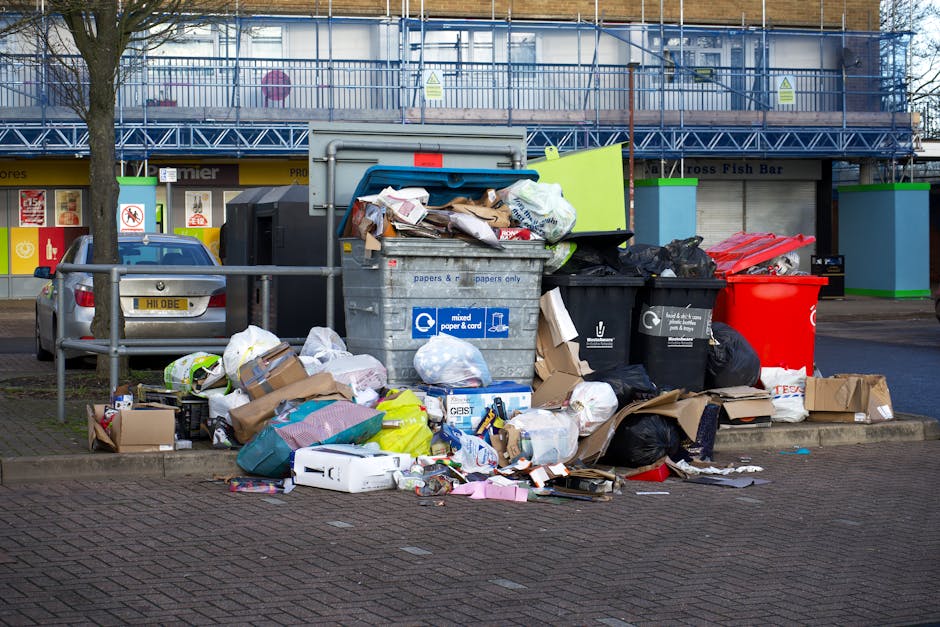
Kingston Council permits for waste skips and rubbish removal
Posted on 17/08/2026

Kingston Council permits for waste skips and rubbish removal: what you need to know
If you are planning a clear-out in Kingston, a renovation, or just trying to make sense of where a skip can legally sit, the rules can feel oddly fiddly. Kingston Council permits for waste skips and rubbish removal matter because the wrong setup can cause delays, complaints, or unnecessary costs. The good news? Once you understand the basics, the process is a lot more manageable than it first looks. This guide walks you through how skip permits work, when they are needed, how rubbish removal fits in, and what to do if you want the whole job handled smoothly.
We will keep it practical. No jargon for the sake of it. Just the stuff that helps you decide whether you need a permit, whether a skip is the right option, and how to stay on the right side of council rules without turning a simple waste job into a headache.
Why Kingston Council permits for waste skips and rubbish removal Matters
Let's face it: most people only think about skip permits when they are already halfway through a project and the waste is piling up. That is usually when the stress starts. In Kingston, the key issue is simple: if a skip is placed on a public road, pavement, verge, or other council-controlled land, you typically need permission. That permission is there to protect road users, pedestrians, access for emergency services, and the general flow of the street.
Why does this matter so much? Because waste management is not just about getting rid of stuff. It is about doing it safely and legally. A skip that blocks sight lines, narrows a footway, or sits too close to parked cars can create real problems, especially on tighter residential streets. And in a borough like Kingston, where access can be mixed - Victorian terraces, estate roads, shops, flats, and busier town-centre areas - the location of the skip is often just as important as the size of the skip.
There is also a practical side to it. If you are comparing skip hire with rubbish removal, the permit question can be the thing that tips the balance. A permit may make sense for a longer project with steady waste output. But if you only have a few bulky items, a quick clearance service may be easier, cleaner, and cheaper overall. In our experience, people often pay for the wrong solution first, then realise they needed something simpler. Bit annoying, to be fair.
For homeowners, landlords, builders, and shop managers alike, understanding the council rules is the difference between an organised job and one that drifts into avoidable hassle. If you are already looking at broader waste support, it can help to review a service overview like the full range of rubbish clearance services and compare that with a more targeted option such as builders waste removal in Kingston or domestic waste collection in Kingston.
How Kingston Council permits for waste skips and rubbish removal Works
At a practical level, the process usually starts with one question: will the skip be placed entirely on private land, or does it need to go on the public highway? If the skip stays on your driveway, forecourt, or another area wholly within your control, a permit is often not needed. If it goes on the road, parking bay, or pavement, you are usually into permit territory.
The permit is generally arranged before the skip is delivered. In many cases, the skip hire provider or waste contractor will deal with the application for you, but the responsibility still matters to you as the customer. The permit is not a box-ticking exercise; it sets out how long the skip can stay in place, where it may sit, and any safety conditions attached to it. Those conditions can include reflective markings, lights, cones, or restrictions on how the skip is loaded.
Rubbish removal works differently. Instead of leaving a container outside for a few days or weeks, a clearance team collects waste directly from your property and removes it in one visit or a small number of visits. That often avoids the need for a highway permit because the waste is not left on the public road. For a lot of households and businesses, that simplicity is exactly the point.
There is a useful distinction here:
- Skip hire works well when you are generating waste over time and need somewhere to keep adding to it.
- Rubbish removal works well when the waste is ready to go and you want it cleared quickly.
- Mixed projects sometimes need both thinking and planning, especially if access is tight or the property sits on a busy road.
If you want to understand how waste handling links to lawful disposal, the page on waste carrier licence and compliance is a sensible read. And if cost is a factor, the article on local rubbish clearance costs in Kingston can help you compare the likely shape of the job before you commit.
Key Benefits and Practical Advantages
The biggest benefit of getting the permit and waste arrangement right is peace of mind. You know the waste is being handled properly, you are less likely to face complaints, and the site stays more orderly. That sounds obvious, but it makes a real difference on the ground - especially when builders, movers, neighbours, or customers are coming and going.
Here are the main practical advantages:
- Reduced risk of enforcement issues when the skip needs to sit on public land.
- Cleaner access for households, trades, and pedestrians.
- Better project planning because waste volume and collection timing are easier to manage.
- Less disruption for neighbours and nearby businesses.
- More suitable disposal choices for bulky, mixed, or awkward waste streams.
Another advantage is flexibility. A well-planned rubbish removal visit can sometimes achieve the same result as a skip, without the visual clutter sitting outside for days. That can be especially useful in places with tight access, resident parking, or local footfall - think station areas, shopping streets, and compact residential roads. For context, the guide on rubbish removal in the Kingston station area gives a good sense of why speed and access matter so much locally.
A more subtle benefit is relationship management. If you are a landlord, facilities manager, or shop owner, getting the permit and waste plan right makes you look organised. People notice. No one may say it out loud, but they do notice the difference between a tidy, permitted setup and a skip that seems to have appeared by magic and annoyed everyone within fifty metres.
Who This Is For and When It Makes Sense
This topic is not just for builders. Kingston Council permits for waste skips and rubbish removal can affect a wide mix of people, and each group has slightly different priorities.
Homeowners often need help during decluttering, moving house, kitchen refits, loft clearances, or garden work. If the driveway is too small, the skip may end up on the street, which brings the permit question into play immediately.
Landlords and letting agents may need fast turnaround after tenant move-outs, bulky furniture disposal, or end-of-tenancy clearances. In that setting, speed and predictable access are usually more important than keeping a skip on site for several days.
Builders and trades tend to care most about capacity, convenience, and disruption. On smaller sites, a skip can be ideal. On congested roads, however, a direct collection service may be the cleaner choice. If you are dealing with renovation debris, it is worth looking at builders waste removal for Kingston properties alongside traditional skip hire.
Businesses and shops face a different set of pressures. Waste often has to be cleared outside customer hours, and nobody wants stockrooms or back entrances becoming a mess. The article on shop rubbish collection near Bentall Centre is a good example of how commercial waste planning can be shaped around opening times and foot traffic.
People with tight access are often the best candidates for rubbish removal rather than skip hire. That includes maisonettes, flats, cul-de-sacs, and homes with limited frontage. If that sounds familiar, you may also find tight-access rubbish clearance for flats useful, even if your own property is not in Surbiton. The access challenges are similar.
Step-by-Step Guidance
If you want to avoid the usual last-minute scramble, follow a sensible process. Not fancy. Just tidy and practical.
- Identify the waste type. Is it mixed household waste, soil and rubble, furniture, garden cuttings, or commercial waste? Different waste streams affect the best disposal route.
- Check where the skip would sit. Private drive or public road? This is the point where permit planning starts.
- Estimate the volume. People often underestimate this. A small clear-out can grow fast once cupboards, lofts, and sheds are opened up.
- Decide between skip hire and rubbish removal. If waste will build gradually, a skip may suit. If the waste is ready now, clearance is often faster.
- Ask about permit handling. If a permit is needed, find out who applies, how long it takes, and whether the arrangement is included in the quoted price.
- Book the right timing. Try to avoid delivery days when parking is already tight or when neighbours are likely to need access.
- Prepare the site. Clear obstacles, protect surfaces if needed, and make sure the collection team can reach the waste safely.
- Sort reusable items first. If something can be donated or reused, remove it before the waste crew arrives. That saves space and reduces avoidable disposal.
Sometimes the best step is the simplest one: ring up, describe the waste honestly, and ask what route suits the property. A short conversation can save a long chain of little problems later. That is especially true if you are dealing with bulky pieces like wardrobes, white goods, or dismantled furniture. The relevant disposal pages for furniture removal in Kingston upon Thames and white goods and appliance disposal are useful if the job includes those items.
Expert Tips for Better Results
Here is where a bit of experience saves money and stress. These are the details people tend to miss on the first pass.
- Leave a buffer for waste volume. If you think you need one skip, be sure it is the right size for a realistic worst case, not the hopeful version.
- Separate reusable items early. Donation, resale, and recycling should happen before the waste heap turns into one confusing pile.
- Plan around neighbours and traffic. A permit is not just paperwork. It is also about practical street management.
- Ask how access affects loading time. Tight stairwells, narrow passages, and shared entrances can change the whole job.
- Keep hazardous or restricted items out of the mix unless specifically accepted. Paint, chemicals, clinical waste, and some electrical items need extra care.
- Use photos when quoting. A few clear pictures usually produce a more accurate recommendation than a quick description over the phone.
One small tip that saves a lot of back-and-forth: if the waste is spread across a house, garden, garage, and front path, take a minute to gather it logically before the team arrives. It sounds trivial, but it often trims the job time and makes the space feel calmer almost immediately. You will notice it.
If sustainability matters to you - and these days it does for most people - take a look at recycling and sustainability practices as part of your planning. In real life, the cleaner the sorting, the better the chance that recyclable materials are separated properly. Not every job is neat. But better sorting always helps.

Common Mistakes to Avoid
The most common error is assuming a skip can just go anywhere. It cannot. If it is on public land, there is likely a permit requirement. That simple mistake can trigger delays or a forced rearrangement. Nobody enjoys moving a half-filled skip at short notice. Nobody.
Another frequent problem is underestimating how much waste will come from a project. A loft clearance, for example, can look tiny until you start pulling down boxes, broken items, old textiles, and things that have been quietly waiting for years. Suddenly the pile is real.
Other mistakes include:
- choosing a skip too small for the job
- forgetting about access for delivery and collection vehicles
- mixing waste types that should be separated
- leaving the booking until the last minute
- not checking whether the provider is properly compliant
There is also a legal-risk mistake that is easy to overlook: handing waste to someone who is not properly authorised to carry and dispose of it. That is why the guidance on carrier licensing and compliance matters. If a contractor cannot explain how waste is transported and disposed of, that is a red flag. Plain and simple.
And on the practical side, do not ignore the human aspect. If your skip blocks a neighbour's driveway or the collection truck arrives when a business entrance is busiest, even a perfectly lawful job can become unpopular. A little thought goes a long way.
Tools, Resources and Recommendations
You do not need a huge toolkit for this, but a few practical resources make the process smoother.
- A simple waste inventory so you know what is being removed.
- Photos of access points for quoting and planning.
- Measurements of gates, drives, and corridors if access is tight.
- Separate bags or boxes for recycling, donations, and true waste.
- Basic timing notes so you can avoid school-run hours, peak traffic, or neighbour parking bottlenecks.
As for resources, the most useful pages are often the ones that clarify the service choice rather than the permit itself. If you are still deciding what kind of clearance you need, the pages on domestic waste collection, house clearance, and commercial waste removal in Kingston can help you match the service to the job.
For those who want a fuller picture of how the company works, about us, insurance and safety, and payment and security are useful trust-building reads before you book. It is not glamorous, I know, but it is the sort of background checking that pays off.
One more practical recommendation: if your project is being done alongside home improvements or a move, read adjacent local guides such as buying property in Kingston or the Kingston property market. They are not permit guides as such, but they do help you think through timing, logistics, and what tends to crop up during ownership changes.
Law, Compliance, Standards, or Best Practice
For this topic, compliance is not there to be scary. It is there to keep waste moving safely and responsibly. The broad expectation in the UK is that waste is collected, transported, and disposed of by appropriate channels, and that skip placement on public land follows the relevant local permission process. The exact detail can vary, so it is wise to treat council guidance and contractor advice carefully rather than assume one borough works exactly like another.
Best practice usually means:
- confirming whether a permit is needed before placing a skip on the highway
- using a compliant waste carrier
- keeping hazardous and prohibited items separate
- ensuring the skip or loading area does not create unnecessary public risk
- keeping paperwork or booking records in case anything needs to be checked later
It also helps to think about safety in a wider sense. Good waste management protects people, surfaces, and access routes. A skip left with uneven loading or poor visibility can be a nuisance. A hurried clearance with no access plan can be worse. That is why the combination of planning, proper handling, and a clear chain of responsibility matters so much.
If your job has any specialist elements - for example, commercial waste, sensitive waste, or potentially contaminated items - it is worth reviewing the relevant service page or speaking to the team before anything is booked. A slightly slower start can prevent a much bigger mess later. Literally and otherwise.
Options, Methods, or Comparison Table
Choosing between skip hire and rubbish removal usually comes down to access, timing, waste type, and how long the waste needs to stay on site. Here is a practical comparison.
| Option | Best for | Main advantage | Possible drawback |
|---|---|---|---|
| Skip hire with permit | Ongoing projects, renovations, and waste that builds up over time | Easy to keep adding waste as the job progresses | May need a permit and can take up street space |
| Skip hire on private land | Homes or sites with enough private space | Usually avoids a public highway permit | Not suitable where space is limited |
| Rubbish removal service | One-off clearances, bulky items, and time-sensitive jobs | Fast, tidy, and often simpler to arrange | Less useful if waste will continue to accumulate for days |
| Combined planning approach | Large or awkward jobs with mixed waste streams | Flexible and often the most efficient overall | Needs a bit more planning upfront |
If you are unsure, the safest decision is often to speak through the job in plain English. For example: "I have a front garden, narrow access, three wardrobes, a broken fridge, and some builder's rubble." That tells an operator much more than a vague "big clear-out". Helpful, right?
Case Study or Real-World Example
Here is a realistic example from the kind of job that comes up all the time in Kingston. A homeowner is refurbishing a kitchen and clearing an old shed at the same time. At first glance, they think a medium skip on the street will solve everything. Then they check the frontage, realise parking is tight, and notice that the skip would partly affect the pavement. That means permit planning, more lead time, and added coordination.
Instead, they decide to split the job into two parts. First, the bulky furniture and mixed household waste are removed in one clearance visit. Then the remaining building waste is handled in a more controlled way, with the placement arranged to suit the property's access. The result is less disruption, no awkward half-finished pile outside the house, and a much quicker return to normal life.
What made the difference? Not magic. Just good sequencing. They did not try to force one method to cover everything. They matched the waste to the method, which is usually where the savings are hiding.
We see a similar pattern with estate moves and end-of-tenancy clearances. A property might need furniture removed, some appliances taken away, and a separate sort-through for donation items. In those cases, a direct clearance route often beats leaving a skip outside for several days. The article on house clearances on Kingston Hill estates gives a good sense of how quickly a property can change when the waste plan is thought through properly.
Practical Checklist
Use this quick checklist before you book anything.
- Have I confirmed whether the skip would sit on private or public land?
- Do I know the main waste type and approximate volume?
- Have I compared skip hire with direct rubbish removal?
- Have I checked access for vehicles, loaders, and pedestrians?
- Do I need time for permit handling before delivery?
- Have I separated donations, recyclables, and true waste?
- Do I understand which items are restricted or need special handling?
- Have I reviewed provider compliance, insurance, and safety information?
- Have I planned for neighbours, parking, and business hours?
- Do I know the date and time window that suits the property best?
If you can tick most of those off, you are already ahead of the curve. And if not, that is fine too - better to pause now than discover a problem after the waste has arrived on the pavement. Been there, as they say, and it is never the fun version.
Get a free quote today and see how much you can save.
Conclusion
Kingston Council permits for waste skips and rubbish removal are not complicated once you break them into the right questions. Where will the waste sit? How long will it stay there? Is a permit required? And is a skip even the best fit for the job in the first place?
The smartest approach is usually the one that matches the waste, the access, and the timetable rather than forcing a one-size-fits-all solution. For some projects, that means a skip with a permit. For others, it means a fast, direct clearance with less disruption and less fuss. Either way, a little planning pays back quickly.
If you take one thing from this guide, let it be this: the cleanest waste job is the one that feels almost boring in the end. No surprises, no awkward delays, no street-side drama. Just the space cleared, the job done, and that oddly satisfying feeling when a room or driveway looks like itself again.
And honestly, that is a good feeling on any day of the week.